Robin Ince: Brian, where does science meet art? what kind of equation would that be? Brian Cox: I would say that if you represent them both as vectors, then their scalar product would be non zero. Robin Ince: Ah, and of course for listeners at home, that means that they'd be not orthogonal... So, 350 years ago, the first members of the Royal society, including Boyle, Ren and Newton, stood around a workbench tampering with the laws of nature, and finding out things that were never meant to be known. Brian Cox: *chuckles* He's learnt nothing.
That's from The Infinite Monkey Cage - an awesome radio show, where Professor Brian Cox and comedian Robin Ince discuss science in the context of popular culture. Subjects cover: evidence, science fiction, homeopathy and 'alternative medicine', conspiracies...etc.
Check out the Science Fiction episode, in 3 parts here:
Today, I'd like to bring your attention to a few people that I feel have made key contributions to science in recent years. People I admire and respect, for key scientific discoveries or changing the face of science from that nerdy kid in the playground to this exciting superhero. Some have just produced research or ideas that have really interested me. So here goes, in no particular order:
1. Professor Brian Cox
...OBE. Particle physics professor and researcher at the University of Manchester, and involved in works at the Large Hadron Collider at CERN. Mostly commonly though, he is probably best known for making science, and physics in particular, exciting and fun on tv. His series Wonders of the Solar System had young people interested in science again. It was the first time in years that we'd seen physics explained to us in words we could understand, by someone that seemed genuinely excited about it all and whose involvement in a rock band made him a representative of the 'cool' team.
He was recently listed in an article in the Independent as one of the top 10 people who have 'changed the world' for his contribution as 'the man who turned science into a sexy subject'.
Now watch him somehow explain the Large Hadron Collider in impressively simple terms, with a massive grin on his face:
2. Cordelia Fine
Neuroscientist Cordelia Fine writes on subjects such as gender and sex. If you are unfamiliar with her work, then I'd highly recommend reading Delusions of Gender. She attacks the works of Simon Baron Cohen on gender, highlighting their every flaw, and performing a sort-of casual meta-analysis of the research on the science of gender. A key point that psychological studies in gender highlight is the difference between sex and gender. In genetics, an individuals sex is determined by the genome it inherits and is identified primarily by the sex organs and also accompanied by differences is hormone levels. Gender however defines the social role and characteristics of each sex. What Baron Cohen and Fine debate is to what extent gender is a direct result of sex, and to what extent gender is a social construction.
3. Richard Dawkins
Whilst often accused of being too angry or passionate against religion, the contribution of University of Oxford Professor Richard Dawkins to both biology and the importance of reason have been overwhelming.
Over his years in science, he progressed from researching genetics and arguing the case of the gene in evolution, to arguing the case of science and reason, against religious 'faith' and in the process brought the case of atheism to mass media, such as tv and books.
As a consequence, however, Dawkins has received worrying quantities of grammatically astounding hate mail. He makes a point of reading it as it's written, and not correcting their mistakes...
4. David Groome
In 2009, Dr David Groome was given an 'Award for Excellence in the teaching of Psychology' by the British Psychological Society. I may be biased as we're related, and I may know little about psychology, but I can say that at the sage of about 12, I was fascinated by his chapter on the psychology behind the belief in horoscopes in Parapsychology: The Psychology of Unusual Experience.
5. David Attenborough
Before Planet Earth, documentaries were a thing of the nerdy. Then suddenly, teenagers were checking with their friends whether they'd watched Planet Earth last night and seen how beautiful the world is!
For that alone, Attenborough should be praised, but he's done so much more than that. With Frozen Planet, in which four episodes each tackled a season of the year at either pole of the Earth, then revealed how they'd manage to film this and the difficulties faced in the process, Attenborough taught us of life we weren't aware of, and of beauty in what we had previously perceived as an empty landscape.
Plus, there was cuteness:
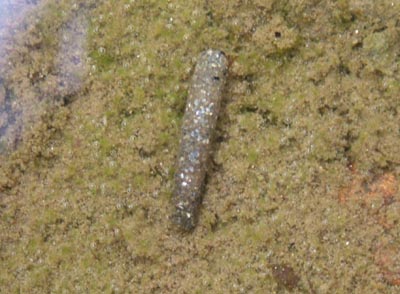
I came across a lot of Trichoptera (caddis fly) larvae during research lately and became fascinated by these guys.
If you aren't familiar with them already, then here's what you need to know...
Caddis flies are an order of insect that are moth-like in the adult stage of their life cycle. But their larvae are aquatic. They only really develop legs at the front of the body:
Why?... Because the rest of the body is encased in a tube made by the larva itself from sediments, particulate organic matter and whatever else they can find, bound together with a kind of silk.
Some make these distinctive cases very smooth by using fine sediments:
others use larger grains:
and some use other random things they find, like bits of plant stems..
Artists have taken interest in them too. Hubert Duprat worked with Caddis fly larvae in the 1980s. He removed them from their natural cases and put them in a tank with flakes of gold and precious gems, like pearls, rubies and saphires. The larvae used the given materials to make these cases:
I feel like all songs should have an actual tune. And to prove this, t-tests and Pearson product-moment correlations should be carried out. If no statistical significance is found between each bar, then it shouldn't be allowed to be called a 'song', merely an irritatingly-repetitive collection of notes.